
Spicebush Coquito
Step aside, eggnog.

If you’re a fan of eggnog, you really should try my family’s recipe for coquito — a Puerto Rican coconut and rum based cocktail loaded with nutmeg and one special not-so-secret ingredient that you may have preserved a bit earlier in the year. Meet Lindera benzoin, also known as spicebush.
Spicebush is hard to nail down, flavor-wise. It has definite aspects of warming spices (think cardamom and allspice) but it also has some strong black pepper notes, and a good bit of citrusy zip too. It’s complex, cozy, and bright all at the same time, which makes it a perfect addition to curries, baked goods, chai, and mixed drinks.
You can recognize spicebush in the wild by its oblong berries (green at first, ripening to red), which smell extremely fragrant when crushed and have a single, oily brown seed in the center, its obovate leaves (narrowest towards the stem end of the leaf) which appear on branchlets, and its smooth, grayish bark covered with small, pimply lenticels. Spicebush is shrubby, rarely reaching over 10 feet tall, and often appears in thickets. The leaves, twigs, and berries all contain strong aromatic compounds that can be used in cooking, baking, and teas, and it’s also well worth collecting some berries before they turn red for a more pronounced black pepper/citrus flavor (red ones lean more towards warming spices).
The trickiest part of spicebush is the potential for spoilage during long-term storage. Most sources will suggest simply dehydrating and grinding the berries, seeds and all, but since the seeds are so fatty, they won’t properly dehydrate and can go rancid within weeks to months. A better option for preservation (albeit more time-consuming) is to simply pop the seeds out by squeezing the berries before dehydrating, a clever yet extremely sensible tip I picked up from my friend Jesse at @feralforaging (thanks, friend)!
Moving on to one of my very favorite applications for this magnificent shrub: coquito. Traditionally, Puerto Ricans enjoy it around Christmas and New Year’s, and functionally, it’s pretty similar to eggnog. Unlike eggnog, it’s coconut-based, which makes for a lovely pairing with rum (feel free to leave it out if you don’t imbibe) and various warming spices, but it maintains a similar thick, velvety, custardy texture. Every recipe is a bit different, but most Puerto Ricans agree that a good coquito should contain practically hallucinogenic levels of nutmeg. I’ve found that combining freshly grated nutmeg with ground spicebush creates the perfect balance of earthiness, spiciness, and zestiness to really make the rum and the coconut sing. Let me know if you make this recipe, and have a very happy holiday season!
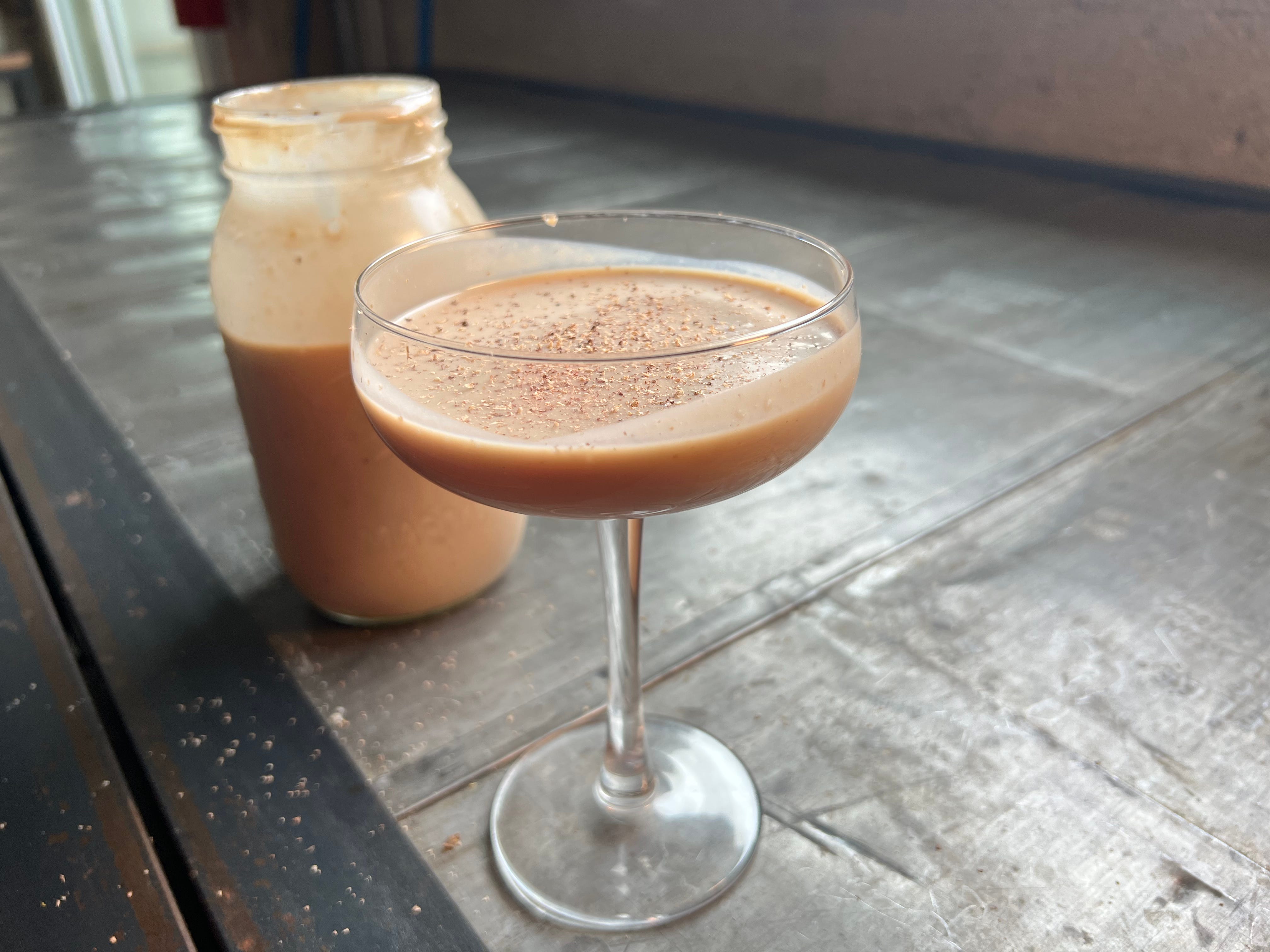
Spicebush Coquito
1 15 oz can cream of coconut
1 14 oz can sweetened condensed coconut milk
1 14 oz can evaporated coconut milk
1 13.5 oz can full fat coconut milk
1 Tbsp dried spicebush berries, ground
1 cup Puerto Rican rum (Don Q, Bacardi Gold, and Bacardi Reserve are decent choices, but Bacardi Black is unspeakably bad, just don’t try it. You’ve been warned.)
1/2 tsp vanilla
1/2 of a single nutmeg, grated, plus more for serving*******
Combine all milks and rum, add ground spicebush, vanilla, and grated nutmeg in a large jar or bowl. Shake or use a hand mixer to combine all ingredients until the mixture is fully combined, resembling melted ice cream. Serve cold with a generous amount of grated nutmeg. Coquito can be stored in Mason jars in the refrigerator for up to 6 weeks.
*******Safety note: The toxic dose of nutmeg for an adult is between two to three teaspoons. This recipe is NOT a single serving, and therefore should not remotely approach the level of toxicity. Thank you for your attention to this matter.